Every bank promises its supervisor that it reviews its customers periodically, more often the riskier they are. Most banks then discover a backlog: reviews scheduled by calendar quarter rather than by risk, high-risk customers overdue while low-risk files are refreshed on time because they are easy, and nobody sure which customers are next. Periodic review is a scheduling problem before it is an analysis problem.
In short
- The cycle follows the rating. In the demo’s illustrative policy, high-risk customers are reviewed every year, medium every two, low every three. The bank sets its own.
- The book knows who is next. Every customer has a last review and a next one, computed from the rating. Due, overdue and in review are filters, not a spreadsheet.
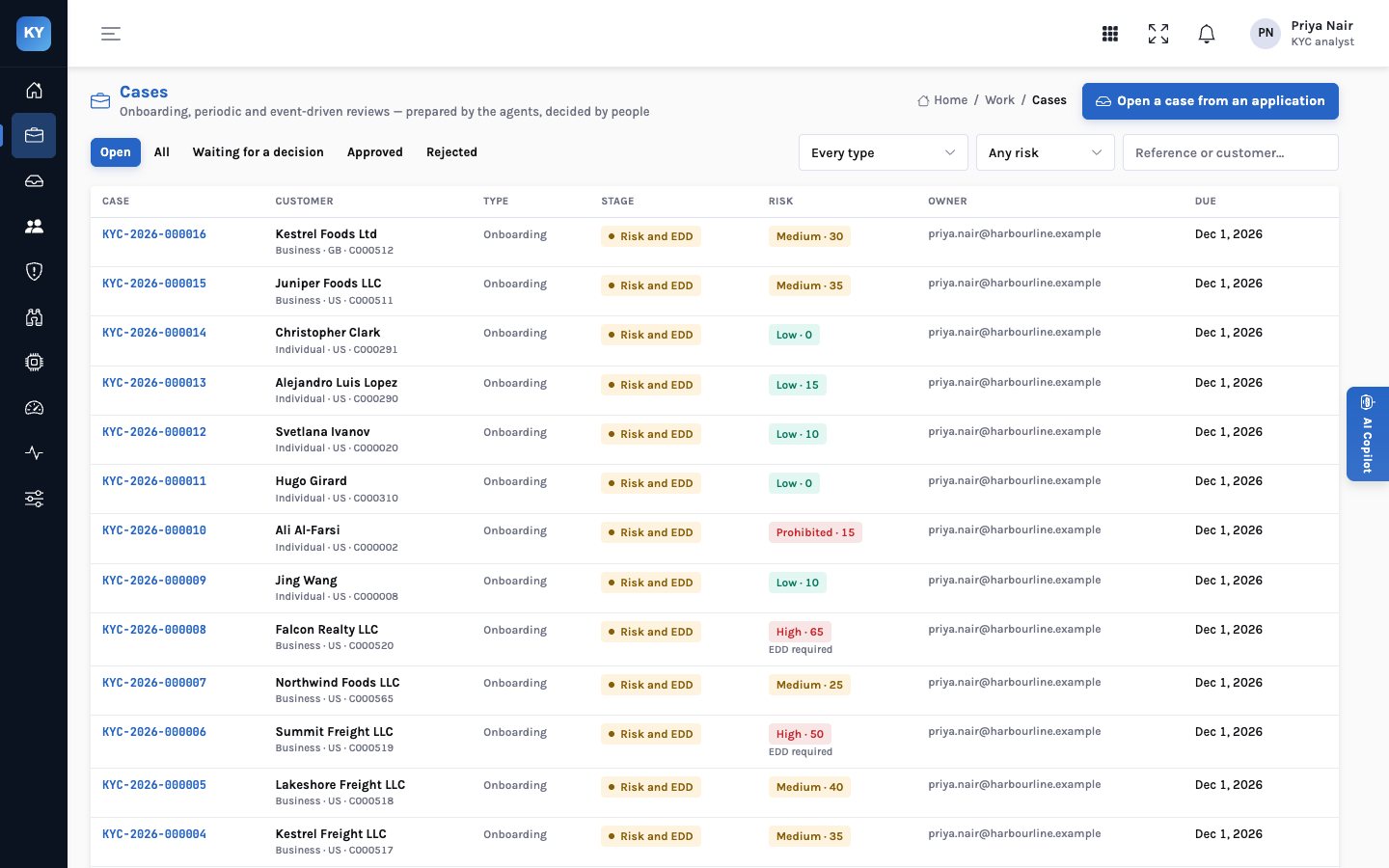
- A due review is one click from a case. “Start review” opens a periodic-review case with the customer’s current documents and parties, and the agents prepare it like an onboarding.
- The outcome resets the clock. When the review is decided, the new rating sets the next due date.
The situation
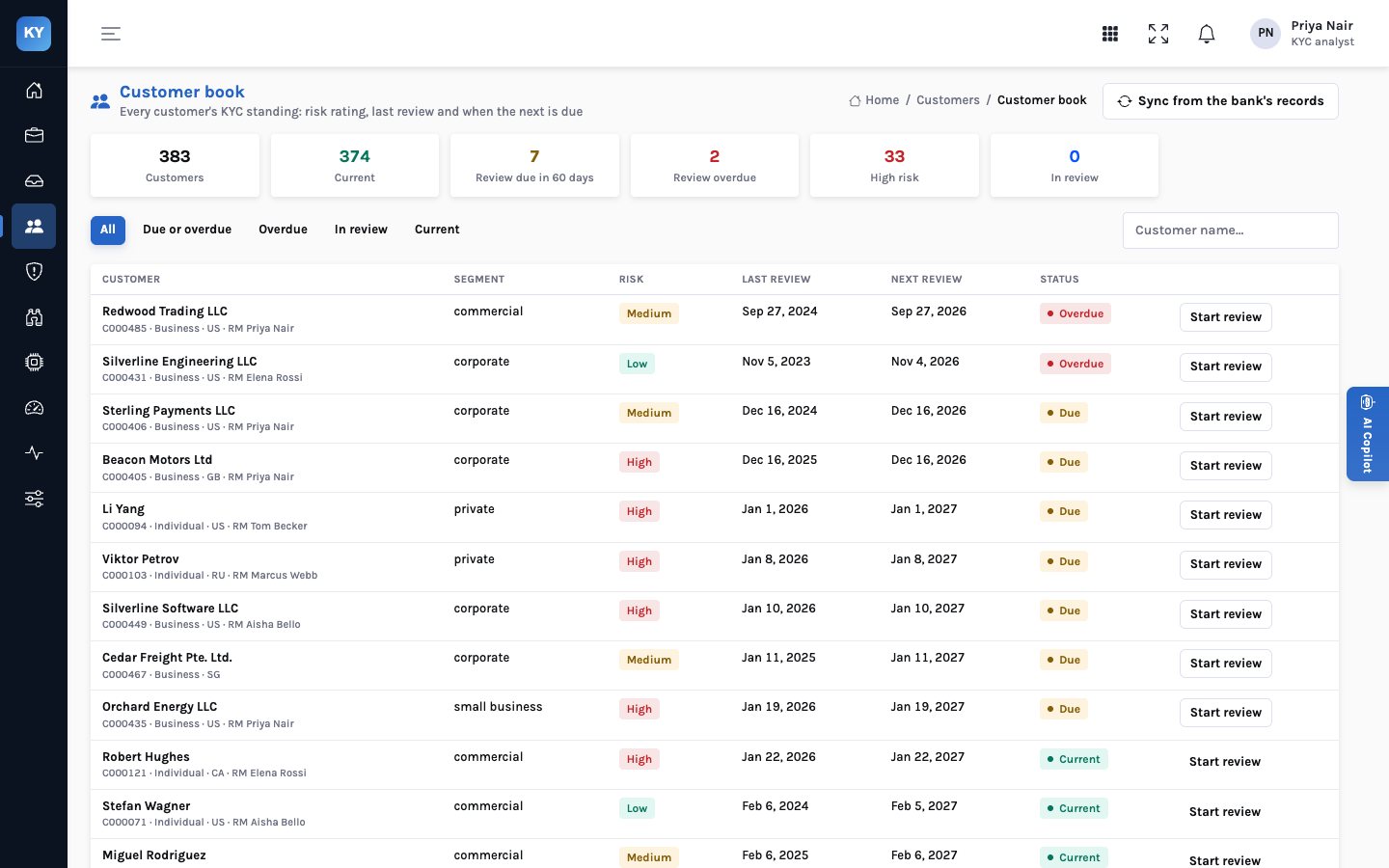
The case uses InsightKYC’s demo data for Harbourline Bank, a fictional bank. The customer book is synced from the bank’s customer records. On the day of the demo it holds:
The two overdue customers show why the cycle has to follow the rating:
| Customer | Rating | Last review | Next review | Status |
|---|---|---|---|---|
| Redwood Trading LLC (C000485) | Medium | 27 Sep 2024 | 27 Sep 2026 | Overdue |
| Silverline Engineering LLC (C000431) | Low | 5 Nov 2023 | 4 Nov 2026 | Overdue |
Two years after a medium rating, three after a low one. Each next date comes from the rating, not from a calendar someone filled in.
Why backlogs build
- Calendar scheduling. Reviews batched by quarter or by anniversary of account opening ignore that a customer’s rating may have changed since.
- Easy files first. When a team is measured on volume, it finishes simple low-risk refreshes and the hard high-risk reviews age.
- Starting is expensive. A review starts by gathering what the bank already has: documents, owners, prior screening, the last rating. If that takes an hour, the review waits.
- No single list. Due dates live in a spreadsheet or a report that is stale the day after it runs.
Someone exports the due list monthly. The analyst assembles the file from three systems before the review can begin.
Due and overdue are filters on the live book. Starting a review opens a case with the customer’s parties and documents, and the agents prepare it before the analyst opens it.
How InsightKYC handles it
The loop: a rating sets a date, the date opens a case, the case sets a new rating.
A periodic review is a case like an onboarding, with a different trigger. The agents read the documents on file and flag what has expired or gone stale. The ownership agent walks the registry again, because owners change. The screening agent screens every party against today’s lists. The risk agent rates the customer on current facts. Anything missing becomes a request the analyst can send.
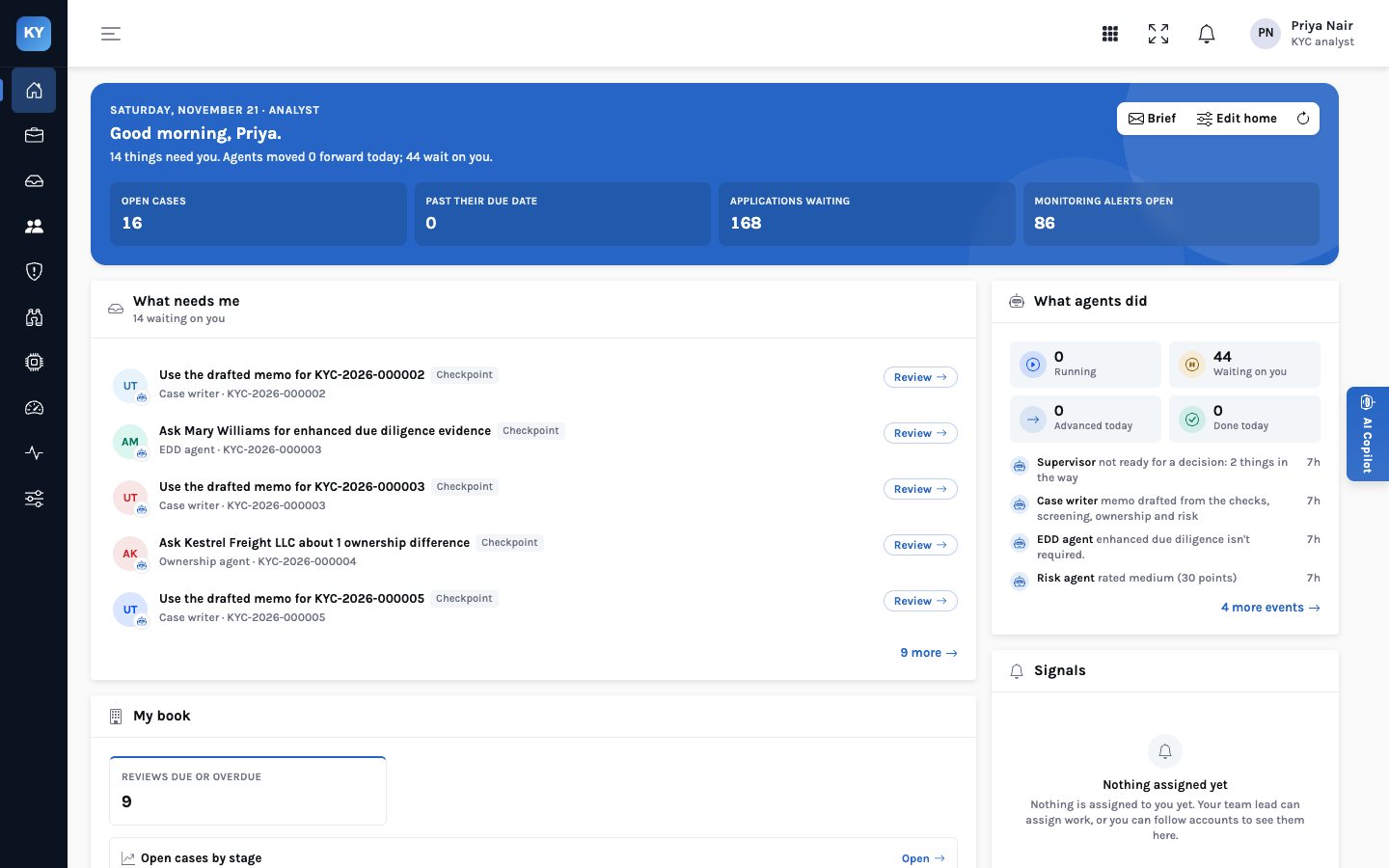
The home page tells each person what needs them: reviews due or overdue in their book, cases waiting, and decisions the agents have prepared.
Who does what
The lead manages the order; the agents prepare; the analyst and lead decide.
Pull current customers from the bank’s records. New customers arrive with their onboarding rating.
Filter to overdue, then due in 60 days. High risk before low risk.
One click from the customer row. The case opens with the customer’s parties and documents.
Expired documents, changed owners, new screening matches and a fresh rating, all prepared before the analyst reads it.
Send the drafted request for current documents or an updated ownership chart.
Approve, or decide to restrict or exit. The new rating sets the next review date.
The analyst’s choices
| What the review finds | Outcome | Effect on the book |
|---|---|---|
| Nothing material has changed | Approve; rating unchanged | Next review in the same cycle |
| The customer is now higher risk | Approve with EDD, or restrict | Shorter cycle from the higher rating |
| A new owner or a new screening match | Work it as on onboarding | The case stays open until resolved |
| The customer doesn’t respond | Escalate under the bank’s exit policy | Recorded; the relationship decision is a lead’s |
What it means for each audience
For the CCO & MLRO
A risk-based approach means the riskiest customers are reviewed most often. The book shows whether that is true today, and overdue high-risk reviews are a number, not a surprise.
Each review leaves a decision record like an onboarding.
For the KYC operations lead
The lead sees the whole book and assigns by risk. The analyst starts from a prepared case, not a blank file.
Requests for refreshed documents are drafted already.
For the board
“Are we up to date with our high-risk customers?” has a one-line answer: how many are overdue, and since when.
It is one of the first questions a supervisor asks.
Metrics to track
What to be careful about
- The cycle is policy. One, two and three years are illustrative settings for a fictional bank. Some regimes and some banks set different cycles, and some customers need trigger-based reviews in between.
- Events don’t wait for the calendar. A monitoring alert, a new adverse media article or a change of ownership should open an event-driven review whatever the due date.
- The book is only as good as the sync. If closed accounts stay in the book, the overdue count is wrong. Sync often.
- Don’t refresh for the sake of it. A review that copies last time’s conclusion without re-screening is not a review.
Review the riskiest customers most often, and be able to prove you do.
Let the rating set the date, let the date open the case, and let the case set the next rating.